


Attendi: quietly impacting healthcare, one word at a time

Attendi: quietly impacting healthcare, one word at a time
Imagine a world where healthcare professionals spend less time on screens and more time connecting with patients. That’s the vision of Attendi co-founders Diederik de Rave and Berend Jutte. Their innovative voice technologies are transforming how care providers manage administrative tasks, freeing up valuable time for what truly matters, and bringing joy back to healthcare. By now, Attendi’s tool is already empowering thousands of care professionals across the Netherlands, seamlessly integrating into existing EPR systems and capturing an impressive one-third of the Dutch home care market.
Voice based reporting: simplicity that saves time
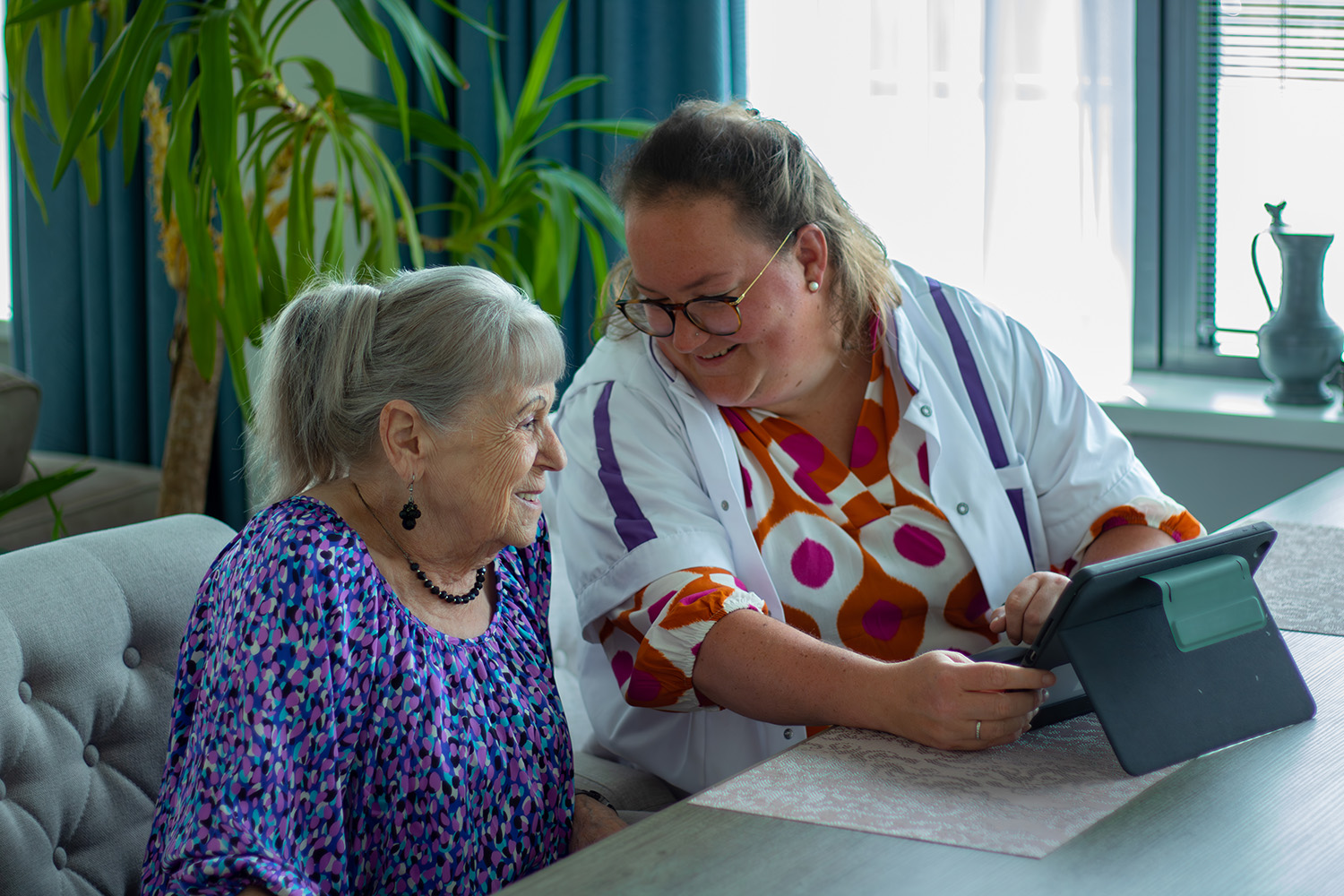
Attendi’s technology is simple yet highly effective. Healthcare professionals can use their voice to document directly into an electronic patient record, anytime, anywhere. “For example,” Diederik explains, “a healthcare professional dictates a report in plain language. Attendi neatly transcribes the report and, where applicable, directly processes mentioned values, such as a blood pressure measurement, into the file.” The time saved is remarkable: less administrative hassle means more time for personal care and connection.
Focus on long-term care
Attendi’s software is designed specifically for various domains in the long-term care sector. A deliberate choice. This includes home care, assisted living facilities, disability care, and mental health services. Diederik highlights the importance of this focus: “Nearly a million people work in healthcare, and 730,000 of them are not employed in hospitals. If we or our parents need care, it’s more likely to come from someone in long-term care than from a hospital. By focusing on these domains, we can really make a bigger impact.”
Despite the vast size of this sector, innovation often lags behind. “Hospitals tend to be more visible and attract innovation funding, but long-term care deserves the same attention,” says Diederik. For now, Attendi remains committed to this sector, though he doesn’t rule out expanding into other areas in the future: “We’ve developed a scalable solution that can eventually be applied more broadly across healthcare.”
The power behind the words: how does Attendi work?
At Attendi, it’s all about words, but not just any words. The team has mastered the art of transforming spoken language from healthcare professionals into nearly flawless reports, tailored to their specific field. “It’s essentially speech-to-text, but to make it work for specific healthcare domains, the technology needs to be trained on millions of reports in specific domains,” says Diederik.
Language tailored to healthcare
Healthcare professionals each have their own specialized terminology and preferences in writing reports, varying across health care domains. “A district nurse uses completely different terms than someone working in disability care,” Diederik explains. Attendi’s software isn’t just about converting speech into text; it ensures the output is clear, well-structured, and comprehensive. “We take raw voice input and turn it into polished, readable reports. The system adds punctuation, paragraphs and even processes specific data like height and weight measurements, integrating these directly into the electronic record,” he says.
Dialect-friendly and always evolving
One of Attendi’s standout features is its adaptability, no matter where users are located. “Our models understand dialects because we use data from users all over the country to continuously improve,” Diederik notes. The process is finely tuned: when mistakes occur, annotators review parts of the data to refine the model further. “By keeping full control over both our AI models and data flow, we can tailor the software to meet the specific needs of every target audience.”
The origins of Attendi
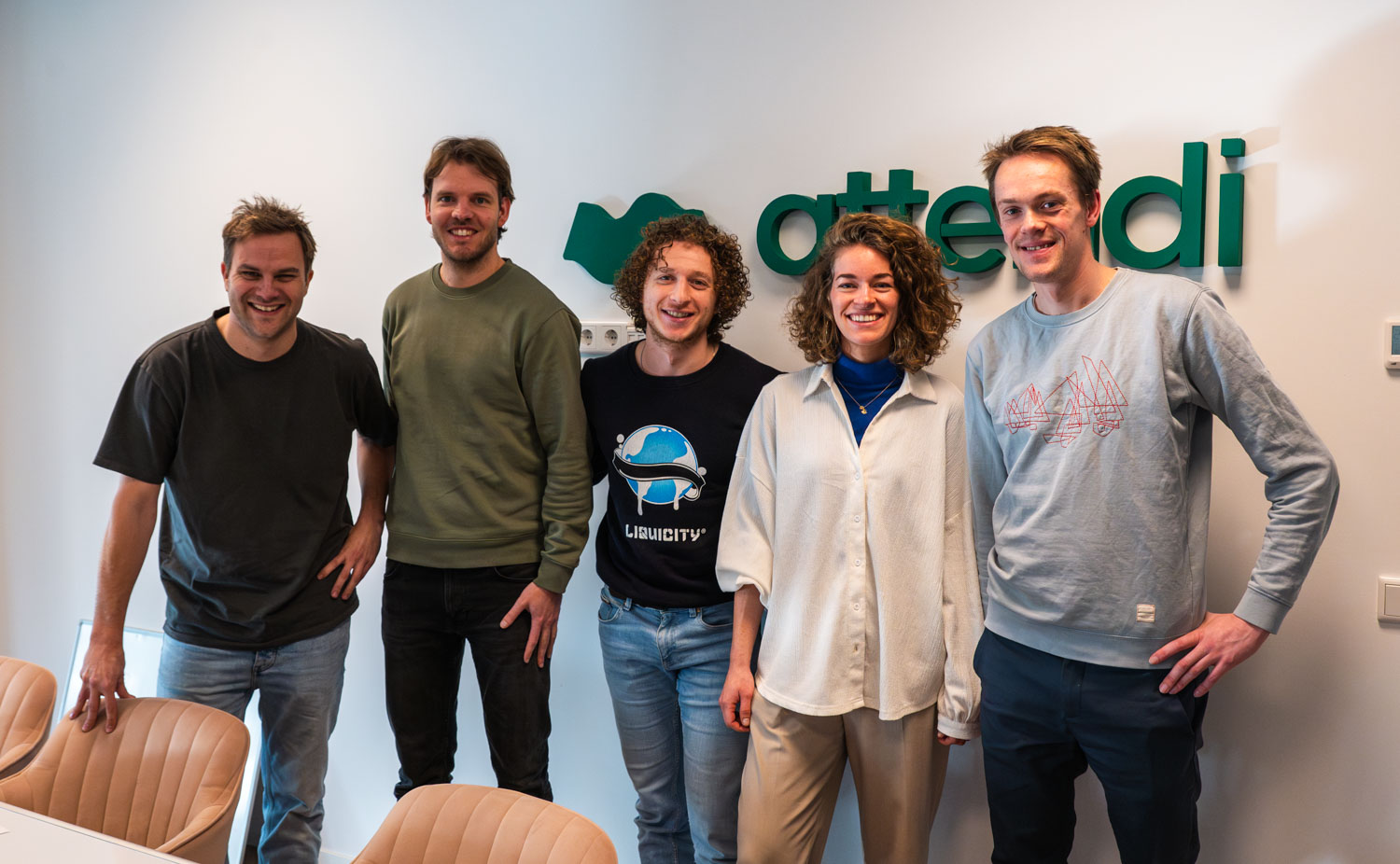
The story of Attendi’s beginnings is as remarkable as the company itself. It all started with an idea, a shared mission, and a chance meeting. Diederik recalls how he met Berend: “We found ourselves on a bus in Bolivia, complete strangers at the time. Over the following weeks, we got to know each other, enjoyed the breathtaking landscapes, shared a few beers, and talked about what we wanted to achieve in life. We both had the ambition to build something that truly makes a difference.”
A few weeks later, Diederik gave Berend a call. “I told him I had a concrete idea. He was running a consultancy firm in AI at the time but decided to join me. And that’s how it all started.”
They also saw a missed opportunity: young talent often opted to work for commercial tech giants instead of focusing on healthcare. “Berend and I wanted to inspire brilliant developers to work on projects with real social impact. That was part of our driving force.”
Building with limited resources
Attendi’s early days were anything but glamorous. “We bootstrapped with our own money and took on side jobs to make ends meet,” Diederik shares. Their first funding came from friends and family, raising €50,000 through a convertible loan. “That allowed us to run our first trials with a healthcare provider. It worked, but there were still gaps we needed to address.”
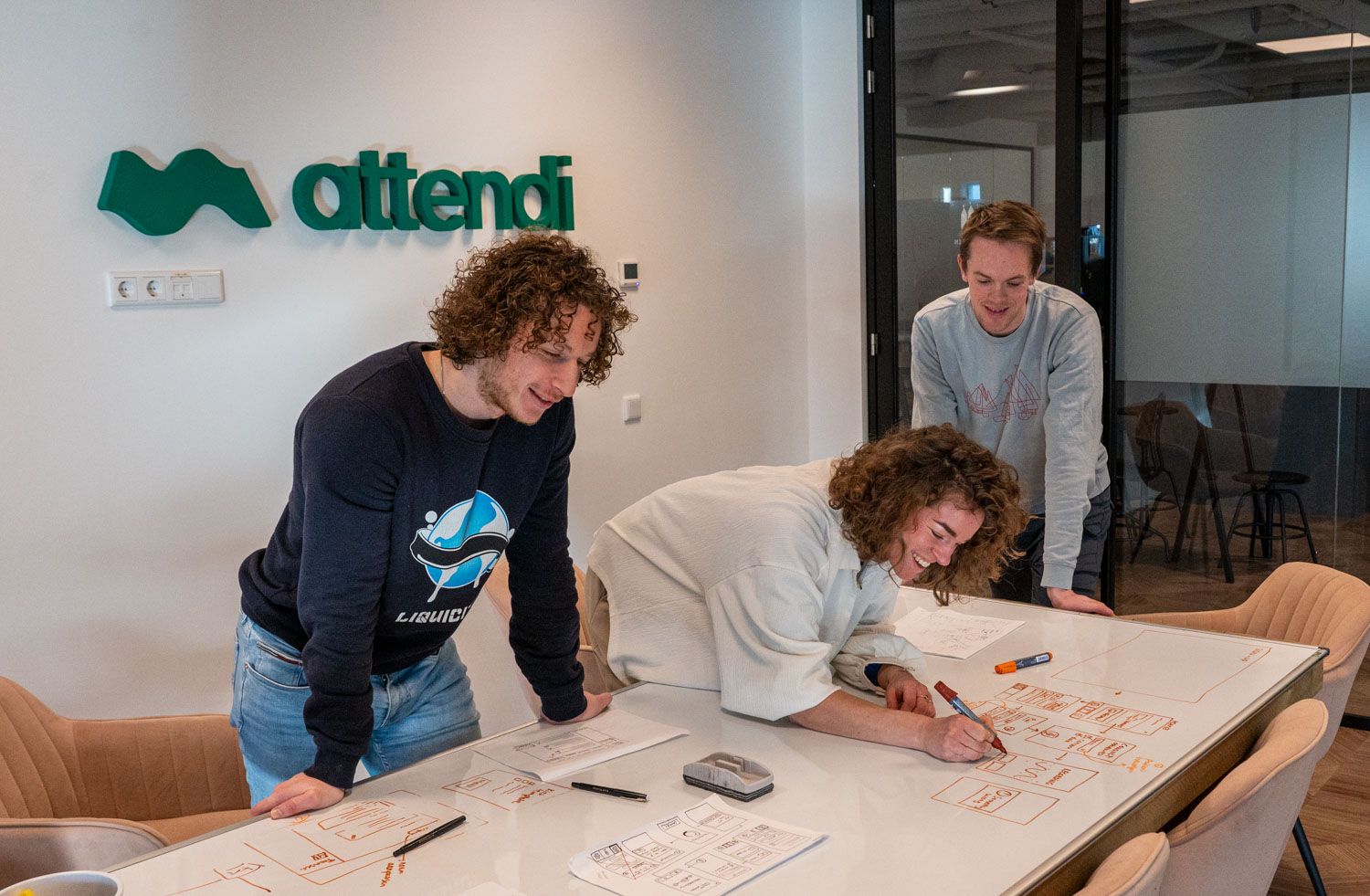
The real breakthrough came with early-stage funding from the Netherlands Enterprise Agency (RVO), which provided €350,000. “That gave us the resources to build a solid foundation. Back then, we were a small team: a speech engineer, a back-end engineer and a machine learning engineer. Together, we created the core of our proprietary technology.”
Investing in knowledge and growth
After laying the groundwork, Attendi attracted a group of angel investors from the healthcare and tech sectors. “They had a wealth of knowledge and helped us take the next step.” As Attendi began to scale, Nextgen Ventures and IFOZ also came on board.
“These phases were critical,” Diederik reflects. “They allowed us not only to refine the technology but also to grow our team and bring our solution to market.”
The hidden force driving success
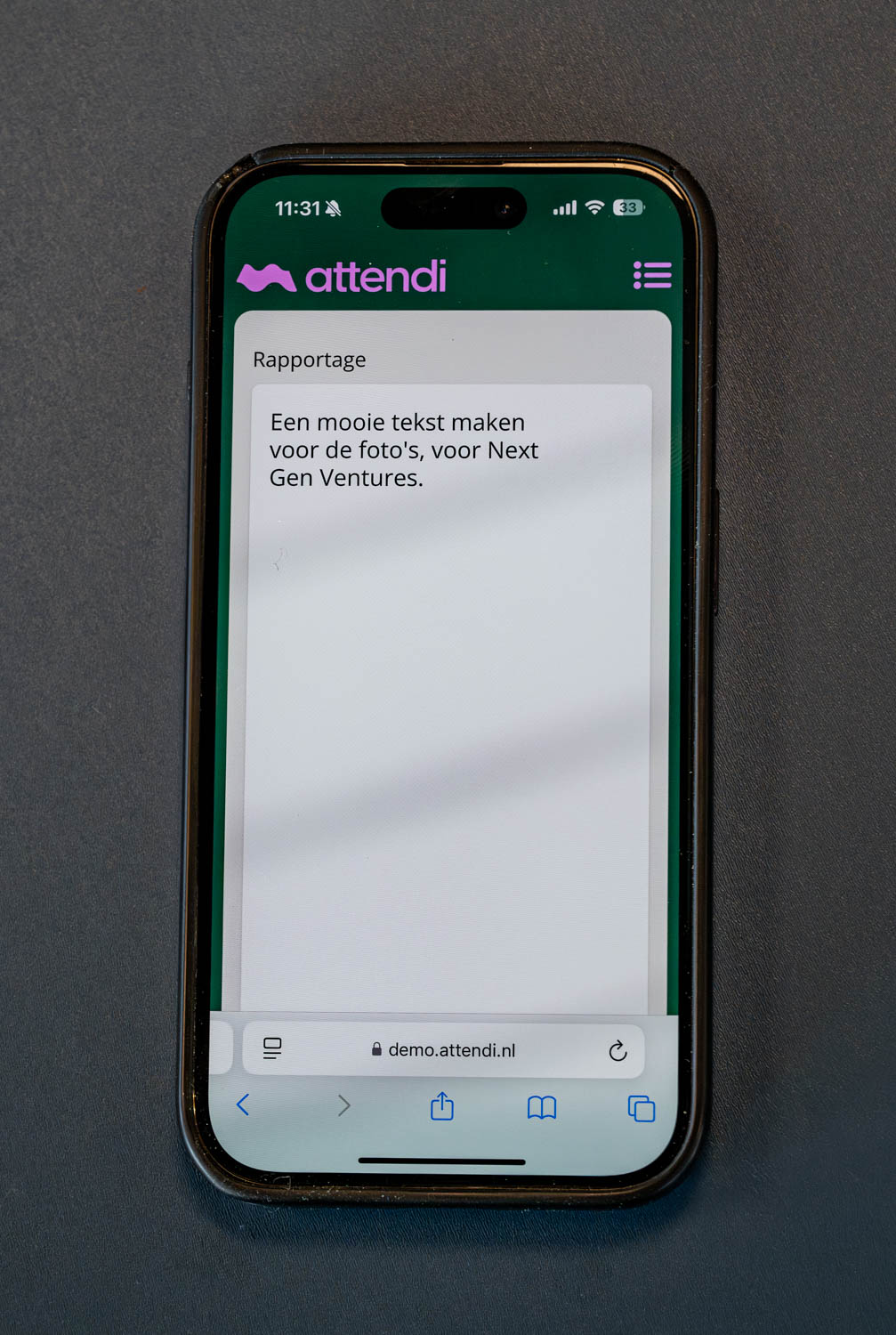
A key factor in Attendi’s success is its seamless integration with electronic patient records (EPRs). Diederik explains how the system works in practice: “Take a home care worker, for example. They open the mobile app or web interface of their EPR, just as they always do. But now, small microphone icons appear in various parts of the record – and those are ours.”
For the healthcare professional, it feels like nothing has changed. “They tap the microphone, speak their report, and our system immediately processes it into the record. The only difference is that typing becomes unnecessary. It’s our job to ensure this software works effortlessly within existing applications.”
Partnering with EPR providers
As a result, collaborations with EPR providers are critical. “If we had developed a standalone app, we would have shifted the burden onto the healthcare professionals,” Diederik explains. “They would have had to switch between systems and perform additional steps. That’s exactly what we wanted to avoid.”
Instead, Attendi chose a different path: partnering with major EPR providers to integrate their technology as an added feature. “It was a pivotal decision for our business model,” Diederik says. “Convincing these providers to work with us takes effort, but when it works, it makes a huge difference. For healthcare professionals, everything stays simple and intuitive, while the technology quietly does its job in the background.”
A perfect match with Nextgen Ventures
In late 2023, both Nextgen Ventures and IFOZ joined forces with Attendi. “At that time, we were integrated with two EPR systems and about to finalize a contract with Nedap, the largest player in our market,” Diederik shares. “We wanted to use that momentum to strengthen and pre-finance the business, ensuring we could handle the growth ahead.” The goal was clear: not just financial backing, but strategic partners to support Attendi’s expansion.
Finding the right partner: Nextgen Ventures
Diederik describes the search for investors as a process of mutual selection. “You have conversations with different parties, and it quickly becomes clear who you connect with,” he explains. From the beginning, there was a strong alignment with Nextgen Ventures. “Their focus on socially impactful innovations with healthy financial returns aligned perfectly with our vision. But it’s also how they communicate: honest, direct, and open. That builds trust.”
Attendi also valued Nextgen’s experience in the healthcare sector. “They understand where our market can grow and how we can get there. That makes them more than just investors. They’re true strategic partners.”
A balanced collaboration with IFOZ
In addition to Nextgen, IFOZ – a collective of care organizations investing in innovative healthcare solutions – also joined Attendi. “The combination is ideal for us,” Diederik says. “Nextgen brings professional investment expertise, while IFOZ offers direct feedback from the field. That ensures we continue to grow both strategically and practically.”
Leveling involvement with autonomy
An important aspect of the partnership with Nextgen is balancing involvement with autonomy. “Berend and I know this company inside and out. We’ve seen it grow from an idea to what it is today,” Diederik says. “It’s crucial for an investor to know when to step in and when to let us do our thing. Nextgen strikes that balance perfectly.”
Daily collaboration primarily happens with Roel Dekkers. “Roel is sharp, honest, and a great sounding board. We have quarterly meetings to discuss strategy and check in ad hoc as needed,” Diederik explains. Whether it’s strategic advice, recruitment support, or making key connections, Roel adds value where it’s needed most. “The starting point is always: what does the company need, and how can they contribute to that?”

Facilitating growth
With its extensive network and deep knowledge of the healthcare market, Nextgen helps Attendi grow faster. “For example, when we want to target a new customer group, they can open doors through their connections,” Diederik notes. Their support extends to areas like recruitment as well. “If we’re looking for a CFO or COO, they can tap into their network to find someone who fits our profile.”
Focus first, but looking ahead
While Attendi is currently focused entirely on the Netherlands, Diederik de Rave is already cautiously looking ahead. “Our model is designed to make it easy to add new languages,” he explains. “We’re now exploring which EPR providers have an international footprint and how we can grow together.”
However, international expansion comes with its own set of challenges. “Every country has a unique healthcare system and way of working,” Diederik says. “In the Netherlands, for instance, home care is very common, while in other countries, families often take on that role. But the use of EPRs and the need to document patient interactions are present in nearly all developed countries. That opens the door for scaling. Still, if you get too distracted by big visions, nothing gets done. So for now, we’re focusing on today.”
There’s plenty of work left to do: “In Dutch home care, we’ve captured about a third of the market, but that means every day, two-thirds of care professionals start their work without our solution,” Diederik notes.
A personal mission: improving healthcare through action
For Diederik, Attendi is more than just a business; it’s a way to make a meaningful impact. “Our generation tends to complain a lot about how the world works but takes relatively little action to change it,” he says. “When Attendi’s journey is complete, I want to look back and see that we’ve truly improved healthcare. Especially the lives of care professionals.”
With a smile, he concludes: “It would be amazing to say: we didn’t just complain; we actually made a difference. And we did it with an amazing team, while having fun together. That’s what I’d be most proud of!”



The BedSense story: empowering caregivers with actionable insights

The BedSense story: empowering caregivers with actionable insights
How do you create a product that not only supports nursing home residents but truly makes a difference for caregivers? Menno Gravemaker, CEO of Momo Medical, has embraced this challenge with determination, scaling from 100 to 10,000 deployed units in just two years. His success lies in his ability to deeply understand and address what caregivers truly need. “It’s all about the caregivers. If they can work with joy and confidence, we’ve achieved our mission.”
The urgent need to ease the burden on caregivers
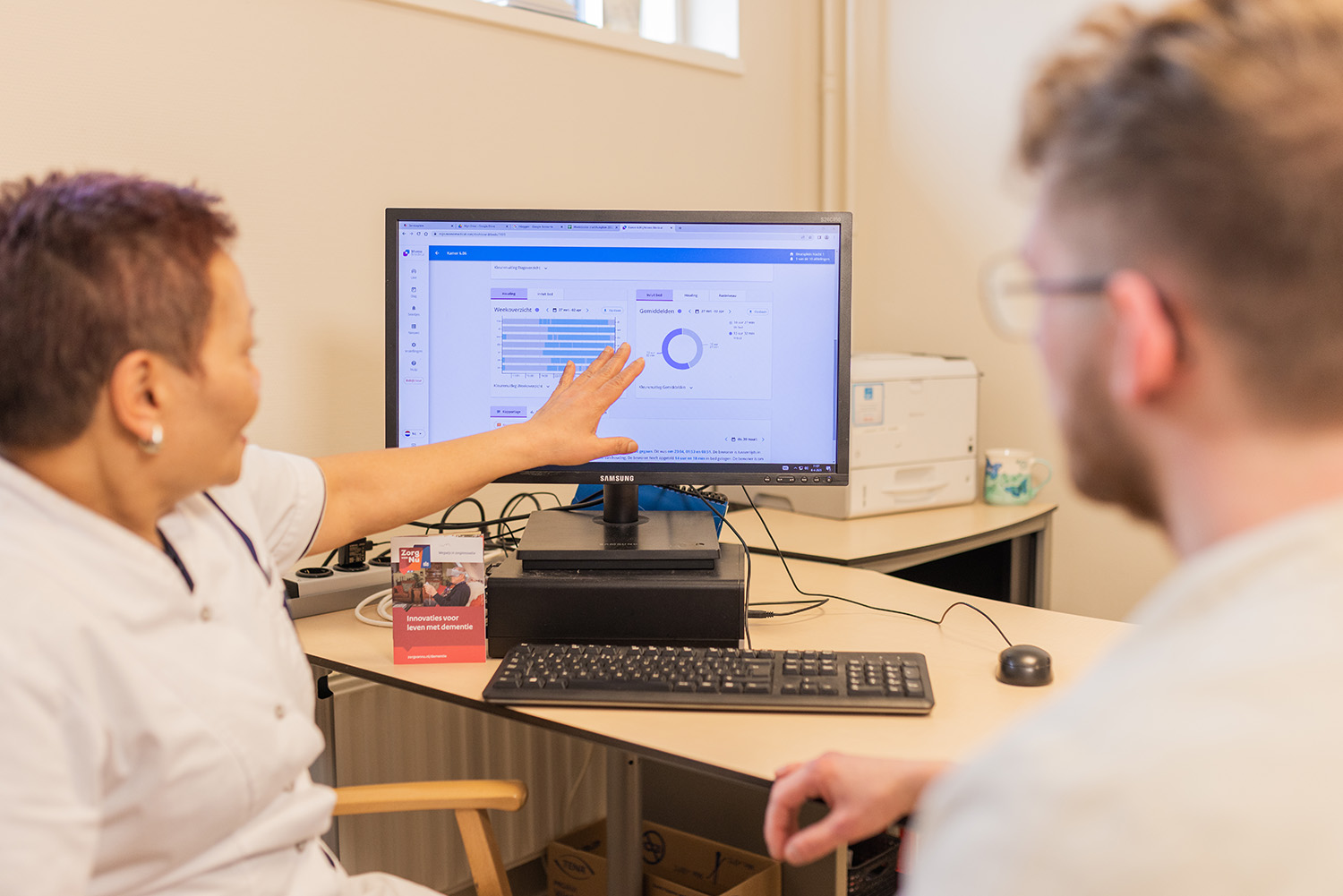
The Momo App pairs with an advanced bedsensor (BedSense), providing caregivers real-time insights across entire departments. The Momo App delivers a powerful dual benefit: it enhances resident safety while significantly boosting caregiver well-being. The result? A remarkable 40% reduction in workload.
Menno highlights why this matters so much: “In the next 20 years, the number of people aged 85 and older will double. At the same time, 30% of caregivers will retire within the next decade. We have to retain and support the ones still in the field. And that won’t happen by assigning one person to 80 residents on a night shift without any tools to help.”
It’s the opening to a passionate call to action from an entrepreneur deeply committed to transforming the caregiving experience.

From TU Delft to transforming healthcare
Menno Gravemaker began his journey studying Electrical Engineering at TU Delft. But a personal experience shifted his focus towards the healthcare sector. “I started to dive deeper into it when my grandmother moved into a nursing home. For the first time, I got a real glimpse of how caregivers work,” he shares. “I was struck by the lack of technological innovation. The tools seemed outdated and caregivers often shared that it was frustrating to work with.”
That experience planted a seed. “Around that time, I had a conversation with a friend about pressure ulcers. I couldn’t believe this was still such a common issue,” Menno recalls. “It seemed like something technology should easily be able to prevent.” Motivated to make a difference, Menno quickly sketched out an idea: bedsensors paired with an app.
The pivot to nursing homes
Inspired by his grandmother’s experience, Menno began shadowing night shifts in nursing homes. “The workload was overwhelming,” he explains. “I could see the daily challenges caregivers face firsthand.”
At that time, Momo Medical’s product was far from fully developed. “It was a process of discovery – figuring out who we were and what we stood for,” Menno says. “We knew there was a problem to solve, but not yet how to solve it. We had to look at how we could improve caregivers’ overall job satisfaction and workflow, starting with the nightshift.”
By early 2020, Momo Medical made the bold decision to fully focus on nursing homes. Menno reflects, “It was a tough call. We had raised significant funds specifically for hospital-focused pressure ulcer prevention. But I had this gut feeling: there was something bigger here. We had to leave everything else behind and take a new direction.”
With limited resources but a clear vision, Menno pressed on. “I knew the potential was there, yet we needed to convince everyone. Eventually, the team, the market and the investors aligned with the vision, and together, we fully committed to serving nursing homes.”
Technology that doesn’t feel like technology
One of the most valuable lessons Menno learned during Momo Medical’s evolution was that technology is only impactful if it’s intuitive and genuinely supportive. “Caregivers want to focus on people, not technology,” he emphasizes. “The challenge is creating something that feels so seamless it could have always been there – no unnecessary complexity. It’s not easy, but it’s the only way to make a real impact.”
Today, feedback from caregivers affirms they’ve succeeded. “They tell us it brings calm and clarity while reducing incidents with residents,” Menno shares. “That’s what it’s all about for us – helping caregivers thrive and residents sleep better and stay safe.”

A moonshot in Silicon Valley
In 2021, Menno decided to take a bold leap and apply to Y Combinator, the renowned accelerator in Silicon Valley. “The acceptance rate was less than 1%,” Menno recalls, “but to our surprise, we got a yes the day after our 10 minute interview. After that, we experienced a 25% monthly growth rate. It was a whirlwind, but it gave us the resources and momentum to scale rapidly.”
Continuously evolving to meet caregivers' needs
In 2024, Nextgen Ventures became a key investor in Momo Medical, alongside PGGM, Fundis, InnovationQuarter, Rabobank, Noaber and several other investors. Menno made a deliberate choice to partner with Nextgen. “Others may have offered higher valuations,” Menno recalls, “but the overall package was right. They have a long-term vision, a genuine passion for healthcare and they let us do what we do best as entrepreneurs. That’s incredibly important.”
Menno appreciates Nextgen’s approach: “They are impact investors, meaning they aim to add real value without exerting excessive control. With other investors, you sometimes encounter situations where they try to take over. That’s never been the case with Nextgen.”
Partnering with Nextgen Ventures
In 2024, Nextgen Ventures became a key investor in Momo Medical, alongside PGGM, Fundis, InnovationQuarter, Rabobank, Noaber and several other investors. Menno made a deliberate choice to partner with Nextgen. “Others may have offered higher valuations,” Menno recalls, “but the overall package was right. They have a long-term vision, a genuine passion for healthcare and they let us do what we do best as entrepreneurs. That’s incredibly important.”
Menno appreciates Nextgen’s approach: “They are impact investors, meaning they aim to add real value without exerting excessive control. With other investors, you sometimes encounter situations where they try to take over. That’s never been the case with Nextgen.”
The value of curiosity
Much of Menno’s interaction with Nextgen revolves around Peter Haasjes. “Before they came on board, I reached out to other entrepreneurs who had worked with Peter,” Menno shares. “I wanted to know what he was like in a boardroom setting. What stood out to me was his incredible curiosity. He genuinely wants to understand how you think and operate.”
This curiosity aligns perfectly with Momo Medical’s philosophy. “Just as we listen to caregivers and nurses, Peter listens to us,” Menno explains. “He asks insightful questions, challenges us when necessary, but ultimately leaves the decisions up to us. That level of trust is essential.”

Strategic support that drives impact
Peter’s involvement goes beyond funding. “We have regular conversations about strategy – should we prioritize growth or focus on profitability? How do we structure our budgets? He always makes me think and asks the right questions,” Menno says.
This trust has proven invaluable. “Nextgen has been instrumental not just financially, but also strategically,” Menno concludes. “They understand that growth isn’t just about numbers – it’s about making a meaningful impact. That’s what makes this partnership so strong.”

Empowering the people who provide care
Menno envisions a future where Momo Medical experiences significant growth in Europe, the United States and Canada. “Our goal is to become the market leader in these regions,” he shares. “In Europe and the U.S., we aim to support one million residents with our solution.” The scalable nature of their technology is key to their expansion. “Thanks to our mesh network, we’re not dependent on the IT infrastructure of nursing homes. But, the real challenge lies in training staff and guiding facilities through the change process.”
These are ambitious goals; however, for Menno, quality always trumps speed. Momo Medical’s ambition is driven by a mission that goes beyond numbers: to support caregivers and nurses around the globe. “It’s about empowering the people who provide care, not about revenue figures or the number of countries we’re in. Our mission always takes priority,” Menno states firmly.
A goal worth striving for
The healthcare sector faces a daunting future, Menno observes: “Twice as many elderly people, many nurses retiring, and a significant dropout rate among new graduates. Something has to change.”
For Menno, the solution lies for an important part in enhancing the joy and satisfaction of caregivers: “I firmly believe that we need to support the people already working in healthcare and ensure they can do their jobs with confidence and happiness.”
It’s a vision that perfectly encapsulates Momo Medical’s mission. By empowering caregivers with the innovative Momo App and focusing on intuitive solutions, Menno and his team are tackling the sector’s challenges. One nursing home at a time, they’re not only making care safer but also making caregiving more fulfilling.
For Menno, this is more than a business – it’s a movement to reshape the future of care, ensuring those on the frontlines have the support they need to thrive. “When caregivers thrive, so does healthcare,” he concludes. That’s a goal worth striving for.

NXG in the FD: 'Why promising medical startups run out of money’

NXG in the FD: 'Why medical startups run out of money'
NXG in the FD: ‘Why medical startups run out of money’
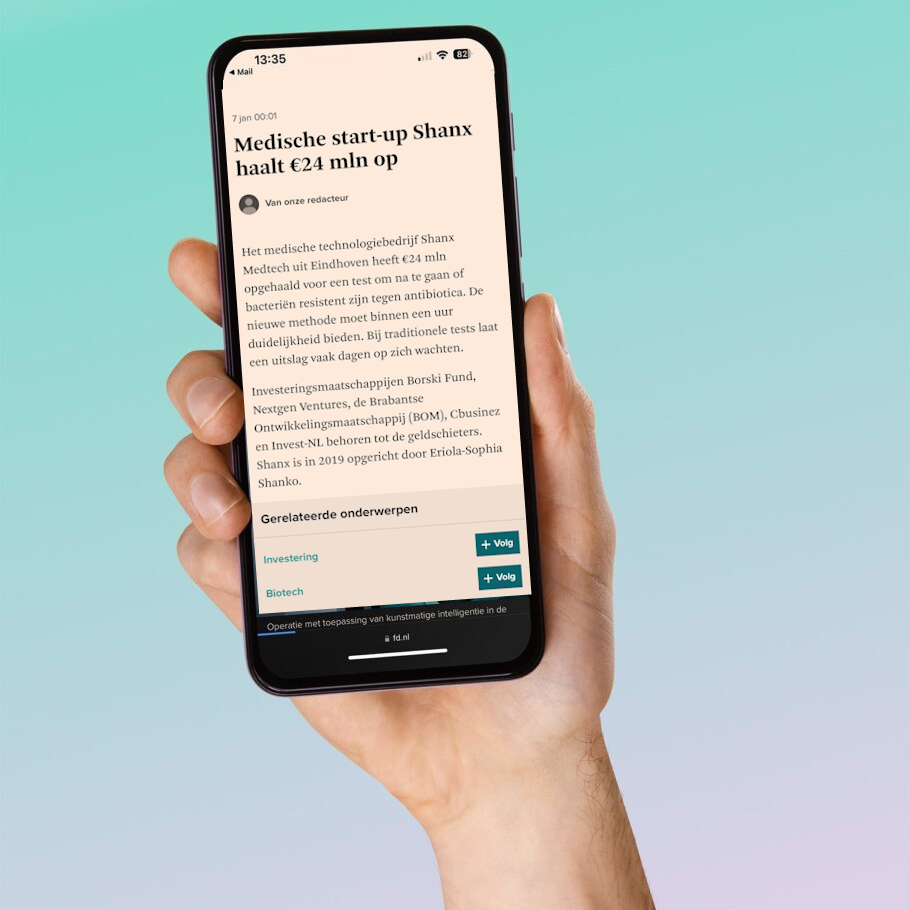
The Financieele Dagblad highlights the funding challenges for Dutch medical startups that inhibits the startups to realize their potential. This requires us, as Peter Haasjes puts it in the article, to look for follow-up financing before we invest into a startup.
We note a mindset shift from gathering clinical data to later-stage market access and reimbursement, effectively resulting in increased interest for companies with revenue in the United States. The key reasons for this are:
1. The introduction of the MDR which makes obtaining a CE-mark for medical devices more difficult as the process is lengthy and less transparent compared to the FDA.
2. The differences in national reimbursement systems within the European Union.
3. The M&A landscape shift towards primarily acquiring revenue generating companies.
Despite the challenges, we see great potential as Europe has tremendous academic ecosystem that drives advancements in regenerative medicine, minimally invasive surgical technologies, and AI. These innovations promise to transform healthcare by extending life and improving efficiency.
Still, success requires a clear understanding of the reimbursement landscape, a strong ‘go-to-market’ strategy and solid plans for funding through sales or fundraising. We’re excited to engage with companies that align with this vision and discuss strategies to bring these technologies to life.
One thing is sure, the article drives engagement. Read the full article here.
